




It’s natural to shop for the lowest price when you’re buying shipping boxes. Budgets are tight, freight costs keep climbing, and the pressure to get orders out fast never stops. So when a supplier offers a box that’s a few cents cheaper, it feels like a win.
But here’s the truth: cheap boxes almost always cost more.
Not on the invoice. But everywhere else.
From damage and returns to extra labor, wasted space, DIM weight, slower workflows, and compliance issues—those “cheap” boxes can quietly drain thousands of dollars a year.
In this guide, we’ll break down the real costs most shipping departments never see until it’s too late. And more importantly, we’ll show you how to actually reduce your total packaging spend without sacrificing strength, speed, or customer satisfaction.
The Hidden Costs of Cheap Boxes
You’re not the only one looking for ways to cut packaging costs. Every warehouse manager, logistics coordinator, and small business owner tries to stretch every dollar. The issue isn’t trying to save money.
It’s saving money the wrong way.
Let’s walk through the major cost buckets where cheap boxes quietly add expense.
What “Cheap” Boxes Really Cost You
Even if a low-cost box saves you a few cents per unit, the downstream impact can easily erase those savings. Here’s where costs creep in.

Product Damage & Returns
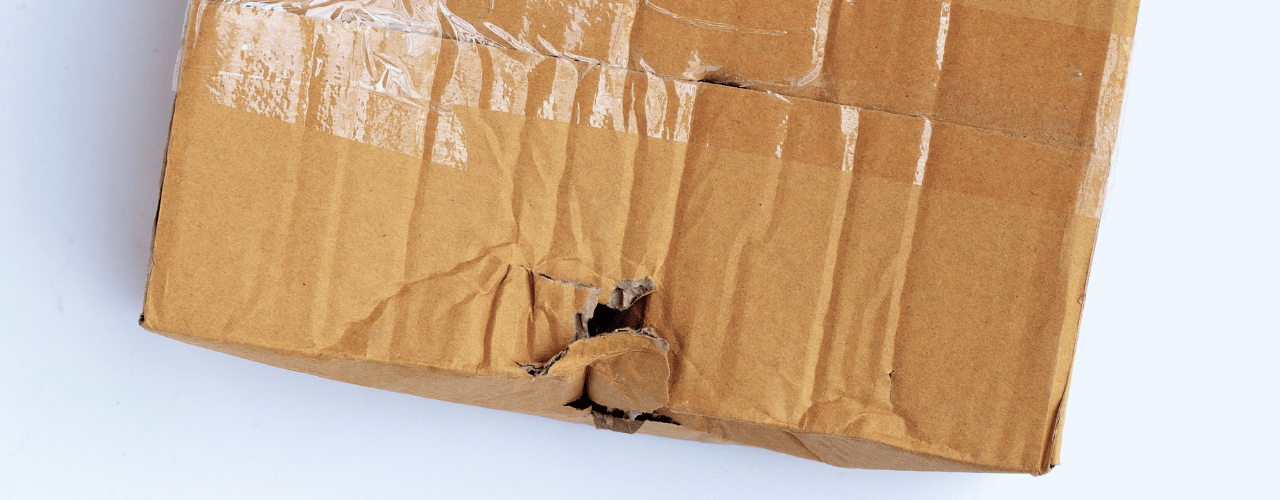
A weaker box might survive some shipments. But all it takes is a small percentage of failures to eliminate any savings.
Example:
You save $0.25 per box.
You ship 20,000 packages a year = $5,000 in savings.
But if even 1% arrive damaged (200 units), and returns cost you $40 each between labor, reshipping, materials, and the lost customer?
That’s $8,000 in losses from a $5,000 “savings.”
Even a 0.25% damage rate can erase every penny you saved.
How to tell if this applies to you:
- Fragile or heavy products
- Ship via UPS/FedEx/USPS
- Large or irregular cartons
- Stacking during LTL or FTL transport
- High-value goods
If you’ve ever had “mystery breakage,” cheap corrugated cardboard is usually the culprit.
Shipping & DIM Weight Inefficiency
Carriers no longer charge based purely on weight. DIM weight (dimensional weight) often determines your rate, especially with lightweight, bulky boxes.
A common mistake? Using boxes that are too large because the cheaper size “was a better deal.” But every extra inch adds cost.
DIM Weight Formula (UPS/FedEx):
Length × Width × Height ÷ 139
A box that’s 2–3 inches larger than necessary can increase shipping costs $3–$9 per package depending on zone and service. Multiply that across thousands of shipments and suddenly the “cheaper” box costs you thousands more per year in freight.
Labor & Throughput Losses
Cheap boxes don’t just fail in transit. They fail on the line.
- Flaps won’t stay square
- Boxes take longer to build
- Tape usage skyrockets
- More repacks during busy hours
- Workers stop trusting the box and start over-reinforcing everything
If your team builds 500 boxes per day, and each cheap box adds just 5 extra seconds, that’s:
500 × 5 sec = 2,500 seconds/day = ~42 minutes lost per shift
Over a year? More than 182 hours of paid labor wasted.
With labor as one of the most expensive parts of fulfillment, this alone can turn a “cheap” box into your most expensive packaging decision.
Storage, Waste, and Obsolescence
Cheap suppliers often expect you to buy large volumes to unlock the lowest price. That sounds great—until inventory starts working against you.
- You order more than you need.
- They take up space on racks you could use for revenue-generating product.
- Your team mistakenly uses the wrong box size.
- A size becomes obsolete before you finish the pallet.
- Boxes warp in storage because they’re lower quality.
That “cheap pallet” becomes a pile of wasted money.
Brand Reputation & Compliance Risks
Your customer doesn’t blame UPS. They blame you. Every damaged package, crushed carton, or sloppy-looking box tells the customer: “This company cut corners.” It takes dozens of great experiences to build trust, and only one damaged order to break it.
Cheap boxes also increase the risk of:
- Failing ISTA guidelines
- Failing internal QA
- Failing Amazon or retail compliance
- Poor first impressions for high-value B2B clients
For repeat buyers or major accounts, this becomes expensive fast.
The True Cost Equation
Let’s reframe the conversation. Instead of “cost per box,” think in terms of Total Packaging Cost.
Here’s the formula we use with clients:
Total Packaging Cost = (Box Cost + Filler Cost + Tape Cost)
+ (Labor Cost per Package) + (Damage Rate × Cost per Damage) + (Freight Impact from DIM Weight) + (Storage Cost per Unit)
Most companies only look at the first line, but the other four often make up 80%+ of your actual packaging spend.
Example: Two Boxes, One Big Difference
| Cost Driver | Cheap Box | Optimized Box |
| Unit Cost | $0.68 | $0.92 |
| Damage Rate | 0.8% | 0.1% |
| Avg Damage Cost | $40 | $40 |
| DIM Weight Cost/Shipment | +$2.20 | +$0.50 |
| Labor Per Box | 22 sec | 14 sec |
Now calculate the totals for 10,000 annual shipments:
| Category | Cheap Box | Optimized Box |
| Box Cost | $6,800 | $9,200 |
| Damage Loss | $3,200 | $400 |
| DIM Cost | $22,000 | $5,000 |
| Labor Cost | $10,670 | $6,800 |
| Total | $42,670 | $21,400 |
The more expensive box saves over $21,000 a year. This is why total cost beats unit cost every time.

How Cheap Boxes Impact Operations
Packaging doesn’t just affect freight. It affects your whole operation. Here are the most common operational issues we see.
Slower Packing Lines
Cheap boxes require more tape, more reinforcement, and more handling. Over thousands of shipments, that can add entire shifts of extra labor per year.
Inconsistent Box Strength
If every bundle of corrugated behaves differently, your team compensates by:
- Adding more tape
- Double-boxing
- Switching to larger boxes
- Using extra void fill
All of which eats your savings.
Unexpected Breakage in Transit
When cartons fail, it’s not just the product cost. It’s:
- Replacement product
- Extra freight
- Customer service time
- Reputation hit
- Lost repeat business
- Negative reviews
Cheap boxes can be the source of all of this.
Repacking Slowdowns
Every warehouse manager knows this one:
A pallet arrives with crushed boxes, and suddenly your team is reboxing half the order before it ships.
A single repack can take 2–3 minutes. Multiply by dozens per day and it’s significant.
Want help improving packaging throughput? Chat with our packaging specialists.
When “Cheap” Makes Sense (and When It Doesn’t)
Not every product needs a premium box. Cheap boxes have their place—if you use them strategically.
When Cheap Boxes Are Fine
- Lightweight products
- Short local deliveries
- Non-fragile, non-crushable items
- Items shipped in protective inner packaging
- LTL shipments where cartons aren’t stacked
- Seasonal or infrequent shipments
If your product is easy to protect, go for it.
When Cheap Boxes Are a Bad Idea
- Fragile goods
- Heavy goods
- Anything stacked in transit
- Products with high return costs
- High-value B2B shipments
- Ecommerce where customer experience matters
- Shipping zones 4+ with UPS/FedEx
If the cost of a damaged shipment outweighs box savings, upgrade.
Smart Ways to Save Without Cutting Quality
You don’t need to choose between “cheap” and “expensive.”
The real savings come from buying smarter.
Here’s how:
1. Right-Size Your Boxes
If your boxes are too large, you’re paying extra for DIM weight and filler. Reducing a box by even one inch per dimension can cut costs immediately.
2. Use the Right Board Grade
You may not need double-wall. Or maybe you do. A packaging expert can tell you which grade meets your needs without over- or under-engineering.
3. Consolidate Sizes
Most operations use far more box sizes than they should. Reducing SKUs simplifies storage and often reduces cost per unit.
4. Leverage Bulk Discounts Where It Makes Sense
Buy more of the sizes you use every day. Don’t overstock slow-movers.
5. Try Recycled or Hybrid Materials
Modern recycled corrugated can perform exceptionally well while reducing cost and improving sustainability.
6. Partner With a Local Supplier
At Quantum, customers often save more from:
- Lower freight
- Faster delivery
- Better fit recommendations
- Less breakage
than they ever saved buying from national suppliers.
Example: The $0.25 Box That Cost $15,000
A manufacturer we met last year switched suppliers to save $0.25 per box.
They shipped 50,000 units annually.
Great, right? $12,500 saved.
Except:
- Damage rate jumped from 0.2% to 1.1%
- UPS DIM fees increased from $8.50 to $12
- Labor increased by 3 minutes per 10 boxes
- Customers complained about crushed cartons
Total cost after switching? Over $27,000 in damage and freight losses.
Net impact: -$15,000 in real losses.
After switching to a right-sized, stronger box, they saved $30,000 the next year.
How to Calculate Your Own Total Cost
Here’s a simple way to determine your true packaging cost.
1. Gather Your Numbers
You’ll need:
- Box price
- Annual shipments
- Average damage cost
- DIM weight for your most-used sizes
- Labor cost per order
2. Calculate Your Damage Rate
How many damaged shipments did you have last month or last quarter?
Divide by total shipments. That’s your rate.
3. Determine DIM Weight Impact
Run your top 5 box sizes through the DIM formula.
Compare actual weight vs. billed weight.
4. Calculate Labor Per Box
Time how long it takes your team to build, pack, and seal a typical box.
Small differences compound fast.
5. Add Everything Up
Use this formula:
Total Cost per Shipment = Box Cost + Extra Labor Cost + (Damage Rate × Damage Cost) + DIM Weight Difference + Void Fill Cost
6. Identify Savings Opportunities
Most companies find savings in:
- Right-sizing
- Changing board grade
- Reducing box sizes
- Improving strength where needed
- Eliminating oversized cartons
Conclusion: Don’t Buy Boxes. Buy Efficiency.
At the end of the day, your packaging isn’t just an expense.
It’s an operational system.
Cheap boxes might lower your unit price, but they raise your total cost—often dramatically. Stronger, well-designed packaging increases speed, reduces freight, cuts waste, protects products, and improves your customer experience.
That’s what actually saves money.
If you want to reduce your packaging spend without cutting quality, we’re here to help. Our team can review your current sizes, freight costs, and damage rates and show you where the real savings are hiding.
You’ll walk away with clarity, better numbers, and packaging that finally works for your operation—not against it.
Shop for Products
Huge inventory, fast delivery.
