





What Is Sustainable Packaging — and How It Can Strengthen Your Business
You’re shipping hundreds or thousands of orders a month.
Your customers expect fast delivery, clean unboxing, and materials that don’t feel wasteful.
And meanwhile, packaging costs keep creeping up.
For many businesses, sustainability isn’t just a feel-good idea anymore. It’s a strategy that can reduce waste, lower long-term expenses, and help you operate more efficiently.
Sustainable packaging is one of the simplest ways to make meaningful improvements.
- It doesn’t require a massive operational overhaul.
- It doesn’t slow down your warehouse.
- And it can actually support your bottom line.
At Quantum Industrial, we work with companies across manufacturing, ecommerce, and fulfillment every day. What we hear is consistent: leaders want packaging that’s better for the planet, but they also need it to be practical, durable, and cost-effective.
This guide will help you understand your options, evaluate what’s right for your business, and move toward sustainable packaging with confidence.
What “Sustainable Packaging” Really Means (Without the Greenwashing)
“Sustainable packaging” gets thrown around a lot. Not all of it is accurate.
At its core, sustainable packaging focuses on reducing environmental impact across the entire lifecycle of a material. That includes sourcing, manufacturing, use, and disposal.
Here’s what real sustainable packaging usually involves:
- Materials that are renewable, recycled, recyclable, or responsibly sourced.
- Packaging that produces less waste and uses less energy across its lifecycle.
- Solutions that can be reused, returned, or repurposed.
And here’s what it doesn’t mean:
- Vague language. Terms like “eco-friendly” or “green” that don’t explain why.
- Hard-to-recycle plastics labeled as recyclable. If it can’t be recycled curbside or through a known program, it’s not truly sustainable.
- Biodegradable claims without context. Some materials only break down in industrial composting facilities, which many communities don’t have.
As you evaluate options, look for clarity.
If a supplier can’t explain how a material reduces waste or improves efficiency, it may not be the real thing.
The Core Types of Sustainable Packaging Materials
There’s no one-size-fits-all solution. The right material depends on your product, volume, storage space, and cost structure. Below are the main categories we recommend to most businesses.
Recycled and Recyclable Packaging
This is the most common and often the most practical choice.
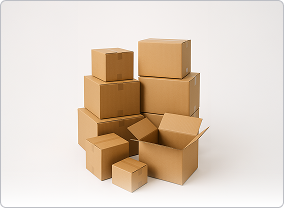
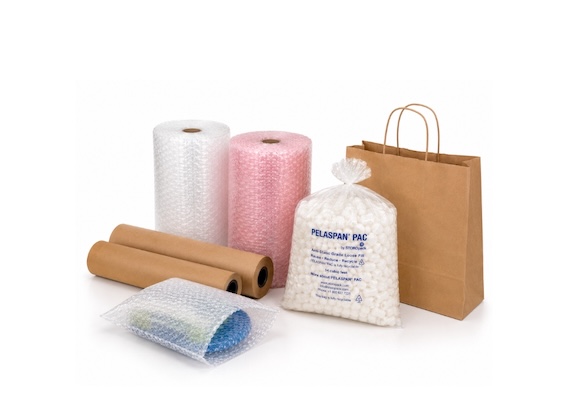
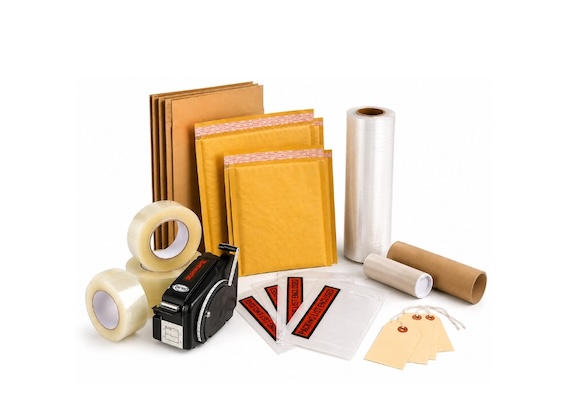
Recycled corrugated boxes, kraft mailers, paper void fill, and padded mailers are durable, cost-effective, and easy for customers to recycle.
Benefits:
- Affordable, widely available
- Strong enough for heavy shipments
- Familiar for warehouse teams
- Recyclable in most curbside programs
Best for:
High-volume shippers, ecommerce brands, manufacturers, B2B fulfillment.
Quantum offers multiple recycled box and mailer options. If you’d like to test a material, you can request samples anytime.
Reusable or Returnable Packaging
Reusable packaging is gaining momentum in B2B logistics. Think totes, crates, and reinforced containers designed to circulate within your supply chain.
Benefits:
- Long-term cost savings
- Reduced waste
- Standardized sizing improves storage efficiency
Best for:
Closed-loop systems, regional distribution, repeated shipments between the same facilities.
If you have recurring deliveries between warehouses, reusable packaging can significantly reduce your supply spend.
Biodegradable and Compostable Options
Biodegradable and compostable materials get a lot of attention, but they aren’t all the same. Biodegradable simply means a material breaks down over time. Compostable means it breaks down into usable soil, often in a controlled composting environment.
Common examples:
- PLA (plant-based plastics from corn or sugarcane)
- Mushroom packaging
- Bagasse (sugarcane fibers)
- Seaweed- and algae-based films
Benefits:
- Strong sustainability story
- Visible commitment to eco-minded customers
- Good alternatives to foam or plastic fillers
Limitations to consider:
- May require industrial composting
- Higher cost
- Shorter shelf life in some cases
These options work best for brands with customers who value eco packaging and are willing to follow proper disposal guidelines.

How to Choose the Right Sustainable Packaging for Your Business
This is where most companies get stuck. There are dozens of options, and comparing them can overwhelm even seasoned operations teams. Here’s a simple framework we use with clients.
Step 1: Define the primary goal
What are you trying to accomplish?
- Reduce waste
- Cut costs over time
- Improve brand perception
- Meet sustainability commitments
- Reduce shipment weight
Your goals shape your material choices.
Step 2: Map your packaging workflow
Look at:
- Order volume
- Product fragility
- Warehouse handling
- Storage space
- Return patterns
A high-volume shipper with limited storage will choose differently than a custom manufacturer shipping irregular items.
Step 3: Identify materials that fit your operational reality
Ask your supplier:
- Is this material durable enough for our shipping conditions?
- Can we source it locally or regionally?
- Is it compatible with the equipment we already use?
- What are the lead times?
- How will this affect our total cost per shipment?
Step 4: Test and compare
Run a small batch.
Track:
- Damage rate
- Packing speed
- Customer feedback
- Cost per shipment
- Storage efficiency
Data will give you clarity quickly. If you need help choosing or testing materials, our team is happy to walk through options with you.
The Business Case for Going Green
Sustainable packaging isn’t just a marketing message.
It delivers measurable business benefits.
Here’s what we see most often.
Lower long-term packaging costs
Recycled and right-sized packaging reduces:
- Material waste
- Void fill requirements
- Freight costs due to lighter shipments
A well-designed packaging system often pays for itself.
Higher customer trust and retention
According to the Sustainable Packaging Coalition, 74% of consumers say eco-friendly packaging increases their likelihood of purchasing from a brand again.
That’s not a small number.
It matters, especially in competitive ecommerce categories.
Regulatory readiness
States are beginning to introduce packaging legislation focused on recyclability, extended producer responsibility, and waste reduction.
Transitioning now prepares you for the policies that are coming.
Operational efficiency
Better materials improve packing speed.
Right-sized boxes reduce damage rates.
Reusable packaging simplifies warehouse workflows.
All of this affects your bottom line.
Innovation in Sustainable Packaging Materials
The pace of innovation is fast.
Here are a few developments shaping the future.
Seaweed and algae-based films
Growing quickly in popularity.
They break down naturally, use renewable resources, and may replace plastic films within the next decade.
Mushroom foam
Made from agricultural waste and mycelium.
It’s strong, compostable, and an excellent alternative to foam inserts.
Sugarcane and bagasse fibers
Lightweight, sturdy, and compostable.
Great for void fill and molded protective packaging.
Quantum evaluates these emerging materials regularly. When a new option proves durable, cost-effective, and scalable, we look for ways to integrate it into our supply network.
Building a Sustainable Supply Chain (Beyond the Box)
Going green isn’t just about switching materials.
It’s about rethinking small parts of your workflow that have big impact.
Here are a few areas to consider.
- Optimize shipment sizes. Right-sizing reduces freight costs and materials.
- Improve inventory management. Buying in bulk reduces deliveries, fuel use, and per-unit costs.
- Local sourcing when possible. Shorter supply chains mean lower emissions and faster fulfillment. Quantum’s local delivery network helps support this for Michigan-based businesses.
- Reduce warehouse waste. Recycling programs, compactors, and reuse systems can make a major difference.
If you need support building a more sustainable fulfillment workflow, we can help map it out.
How to Get Started with Sustainable Packaging at Quantum Industrial
If you’re ready to take the next step, here’s a simple path to follow.
1. Assess your current packaging.
Look at material usage, waste, and freight costs.
2. Talk to our team.
We’ll help you identify realistic improvements based on your business.
3. Request samples.
Get materials in your warehouse so your team can test them.
4. Implement and measure.
Track performance, cost, and customer feedback.
Small changes can create meaningful improvements, and you don’t have to overhaul everything at once.
If you’re unsure where to begin, reach out. We’ll guide you.
Final Thoughts — Progress Over Perfection
Sustainable packaging isn’t about perfection.
It’s about making smart decisions that help your business operate more efficiently while reducing environmental impact.
Every improvement counts.
Every right-sized box, recycled mailer, or reusable container moves you in a better direction.
And you don’t have to do it alone.
Contact Quantum Industrial to start your sustainability journey.
We’re here to help you choose the right materials, test new ideas, and build a packaging system that supports your goals today and in the future.
Shop for Products
Huge inventory, fast delivery.
