




Packaging decisions don’t feel complicated until they do.
Maybe you’ve stuck with standard boxes because “they’re cheaper.” Or you’ve wondered if custom packaging is worth the time, cost, or inventory commitment. Or maybe you’re somewhere in between, trying to balance cost, protection, branding, and operational efficiency without overthinking it.
You’re not alone. Business owners and operations teams face this exact choice every day, and most don’t have clear guidance.
This article breaks it all down: what standard packaging does well, where custom packaging shines, when each option makes sense, and how to choose confidently. At Quantum, we help companies make this decision every day, whether they ship 20 packages a day or 500.
What Is Standard Packaging?
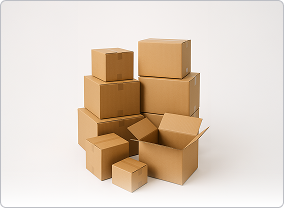
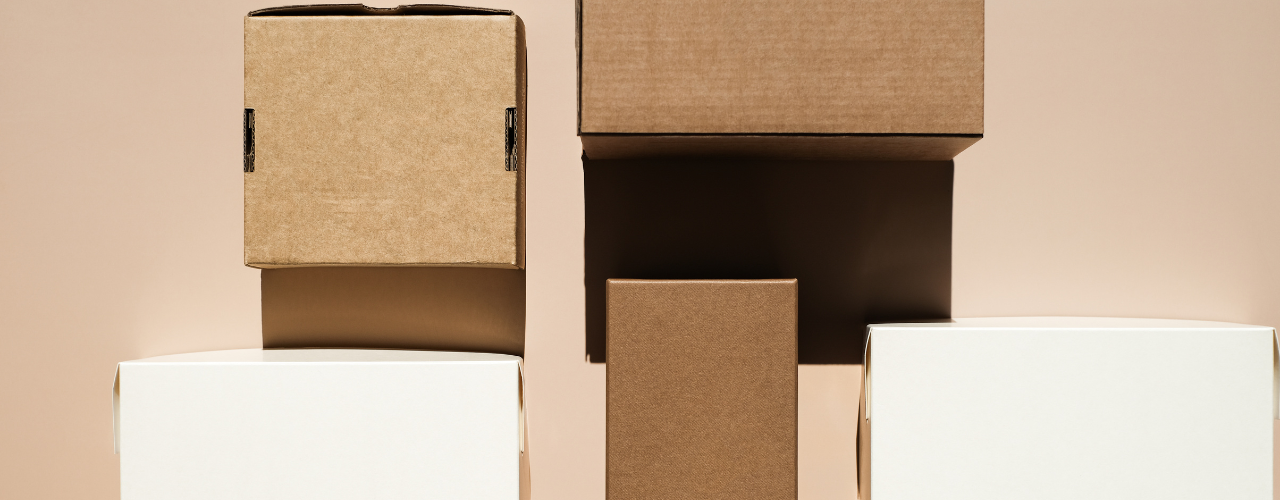
Standard packaging refers to “off-the-shelf” boxes, mailers, and materials produced in common sizes, strengths, and formats. These are the boxes you find in every warehouse.
Why businesses choose standard packaging
Standard packaging is popular because it’s:
Affordable. Mass-produced means lower cost per unit, ideal for high-volume shippers or products that don’t need a custom fit.
Simple. No design process. No approvals. No minimums. Just grab-and-go.
Widely available. Especially when your supplier is local. Businesses in our region often count on standard boxes because they can pick them up same-day or get next-day delivery.
Reliable. The sizing is predictable. Your packing stations stay consistent.
Where standard packaging falls short
Standard packaging isn’t perfect for every scenario. The most common drawbacks include:
- Wasted space inside the box → higher void fill costs, heavier shipments
- Less product protection → more damage claims
- Higher dimensional weight charges if the box is larger than needed
- No branding or customer experience impact
- Inconsistent fit across varied product lines
If you’ve ever felt like you’re forcing a product into a box that “kind of works,” standard packaging may be holding your efficiency back.
What Is Custom Packaging?
Custom packaging is built for your product, not the other way around. You choose the size, strength, materials, inserts, printing, and structure to create an exact match.
Think:
- A box that fits your product with no wasted space
- Custom inserts that hold items in place
- Printed boxes that carry your branding
- Packaging designed for fragile, heavy, or oversized products
- Materials engineered for sustainability, shipping efficiency, or compliance standards
Why companies switch to custom packaging
Custom solutions shine when businesses want:
- Better protection. Less movement inside the box means fewer damaged shipments.
- Lower shipping costs. Right-sized boxes reduce dimensional weight, a major cost-saver.
- More efficient packing workflows. When the box fits, packing gets faster and more repeatable.
- A higher-end customer experience. Unboxing matters, especially for e-commerce and brands that ship direct.
- Brand consistency. Printed packaging reinforces professionalism and trust.
When custom packaging may not be worth it
Not every business needs custom packaging, especially if:
- You have highly varied SKUs
- Order volume is low or unpredictable
- You lack space to store custom inventory
- Your products already fit standard sizes well
Custom packaging is most valuable for companies with predictable shipments, consistent product lines, or high damage rates.
Standard vs. Custom Packaging: A Side-by-Side Comparison
| Category | Standard Packaging | Custom Packaging |
| Cost per unit | Low | Higher upfront, lower over time |
| Shipping efficiency | Often less efficient | High (right-sized reduces DIM weight) |
| Product protection | Good, not perfect | Excellent (engineered fit) |
| Branding | None | Full customization (print, color, inserts) |
| Speed & availability | Immediate | Requires lead times |
| Waste reduction | Moderate | High (less void fill) |
| Minimum order quantities | None | Typically required |
| Best for | Many SKUs, general shipping | Consistent SKUs, damage prevention, branding |
This comparison often surprises people – many assume custom packaging always costs more. But when dimensional weight, damages, void fill, and customer experience are factored in, custom packaging frequently becomes the more economical long-term choice.

How to Decide Which Packaging Type Fits Your Business
Use this framework to make a clear, confident choice.
1. Evaluate your product mix
If most of your products don’t fit standard sizes well (too much empty space, products shifting in transit, frequent returns), custom packaging may solve the core issue.
2. Look at your damage rate
A damage rate above 2–3% often indicates the box fit isn’t right. Custom inserts or structural improvements can drop this dramatically.
3. Factor in shipping costs
Dimensional weight pricing means oversized standard boxes can cost more to ship than the products inside. Custom right-sizing quickly offsets cost differences.
4. Consider your packing workflow
Do packers spend time wrestling with materials or overfilling boxes?
Custom packaging can simplify and speed up operations.
5. Assess your brand experience
If you rely on repeat customers, ecommerce sales, or product presentation, custom packaging builds connection and professionalism that standard boxes can’t.
6. Think about storage and flexibility
If space is tight, start with one or two high-impact custom SKUs rather than converting everything at once.
When in doubt, we walk customers through a simple packaging audit, often revealing savings or efficiencies they didn’t know were possible.
Why Custom Packaging Pays Off Over Time
The long-term ROI of custom packaging comes from four key areas:
1. Lower Shipping Costs
Right-sized packaging reduces dimensional weight and prevents carriers from charging you for empty space.
2. Fewer Damaged Shipments
Better fit → less movement → fewer headaches for your team and customers.
3. Streamlined Warehouse Operations
Faster packing, more predictable workflows, and easier training for new staff.
4. Stronger Brand Perception
Custom packaging creates an experience, not just a box.
A Quick Example
A local manufacturer ships fragile components using oversized standard boxes with a lot of void fill. They experience:
- Rising shipping costs
- 6% damage rate
- Slow packing times
After switching to a custom right-sized box with a simple insert:
- Shipping costs dropped by 18%
- Damage rate fell below 1%
- Packing time improved by 22%
This is exactly why businesses shift. Better fit equals better efficiency, and it shows up on the balance sheet.
How to Transition from Standard to Custom Packaging
Many companies hesitate because change feels intimidating. But with the right partner, the shift is easier than most expect.
Here’s a straightforward transition plan:
1. Start with a packaging audit
Review your current boxes, product dimensions, packing process, and shipping data.
2. Identify 1–3 “high-impact” SKUs
You don’t need to overhaul everything at once. Start where custom packaging saves the most money or improves the most efficiency.
3. Test prototypes and samples
You’ll be able to see, test, and refine before ordering.
4. Approve materials and specs
Ensure strength, sustainability, and compliance meet your needs.
5. Plan for inventory and storage
Determine optimal quantities based on your usage, space, and budget.
6. Roll out gradually
Employees adapt quickly when packaging improves their workflow.
If you want help walking through this, you can schedule a packaging consultation anytime.
Final Thoughts: The Right Packaging for the Right Business
Your packaging isn’t just a cost; it’s part of your customer experience, your shipping efficiency, and your bottom line. The right choice depends on your products, your volume, and your goals.
Standard packaging is affordable, fast, and reliable for general needs.
Custom packaging improves protection, efficiency, and brand perception, often paying for itself over time.
Most important: You don’t have to guess. Quantum helps companies across manufacturing, ecommerce, fulfillment, and local operations choose and implement the best-fit packaging for their stage of growth.
If you want clarity or want to explore what custom packaging could save you, contact us. We’re here to make your job easier.
Shop for Products
Huge inventory, fast delivery.
